Sourcing 904L stainless steel plate for critical applications in chemical processing, offshore, or marine environments is a high-stakes decision. The material's superior resistance to acids like sulfuric and chlorides comes at a premium, and the market's complexity means that premium price doesn't always guarantee premium, or even genuine, material. Relying solely on a mill test certificate that simply says "904L" is no longer sufficient. This guide outlines a practical, multi-layered approach to verification, ensuring the plate you procure delivers the performance your project was designed for.
Decoding the Alloy Design: The Metallurgical "Why" Behind Mo and Cu
Authentic 904L (UNS N08904) is defined by a synergistic alloy strategy. While its high chromium (~20%) and nickel (~25%) provide a stable austenitic matrix and baseline corrosion resistance, the performance leap comes from molybdenum and copper.
Molybdenum's primary role is to dramatically increase the Pitting Resistance Equivalent Number (PREN). In chloride-rich environments, Mo-enriched oxides within the passive film resist localized breakdown, preventing the initiation of pitting and crevice corrosion. A target of ≥4.2% Mo (versus the 4.0% minimum) provides a meaningful safety margin against these failure modes, especially in stagnant or under-deposit conditions.
Copper is the critical differentiator. In reducing acids like sulfuric acid, copper ions enrich the material's surface layer, lowering the cathodic reaction rate and significantly inhibiting uniform corrosion. This mechanism is absent in standard molybdenum-bearing steels like 316L. Therefore, a verified Cu content between 1.5% and 2.0% is non-negotiable for sulfuric acid service. Plates with Cu at the lower specification limit (1.0%) may show acceptable corrosion rates in laboratory tests but can exhibit unpredictable performance in real-world, fluctuating plant conditions. The procurement specification should explicitly state acceptable ranges for these elements, targeting the mid-to-upper spectrum of the ASTM A240 standard.
Forensic Document Analysis: Interpreting the Mill Test Certificate as a Quality Forecast
A Mill Test Certificate (MTC) is a snapshot of the material's pedigree. A proficient reviewer looks beyond the "pass" or "fail" against standards and interprets the data to forecast fabrication behavior and long-term performance.
Chemistry as a Predictor: Consistent, mid-range values for Mo, Cu, and Ni suggest tight process control at the mill. High residual elements (like sulfur or phosphorus) can adversely affect hot workability and weldability. The carbon content must be ≤0.020%; a value of 0.015% is superior, as it further minimizes the risk of sensitization during welding.
Mechanical Properties in Context: Yield and tensile strength should meet the standard. More importantly, exceptionally high yield strength in the solution-annealed condition can indicate insufficient annealing temperature or time, which may lead to inconsistent forming behavior or the presence of detrimental intermetallic phases. Optimal elongation (typically >40%) is a good indicator of ductility for subsequent cold forming.
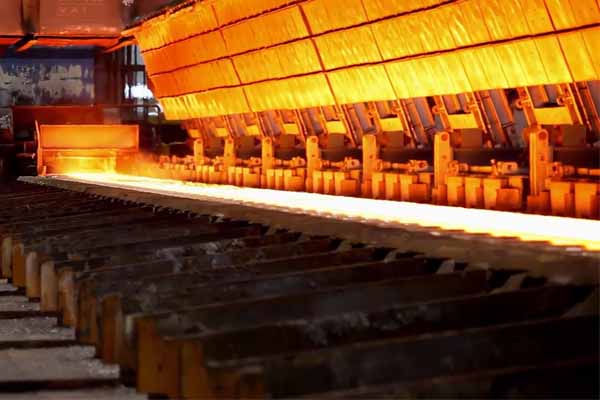
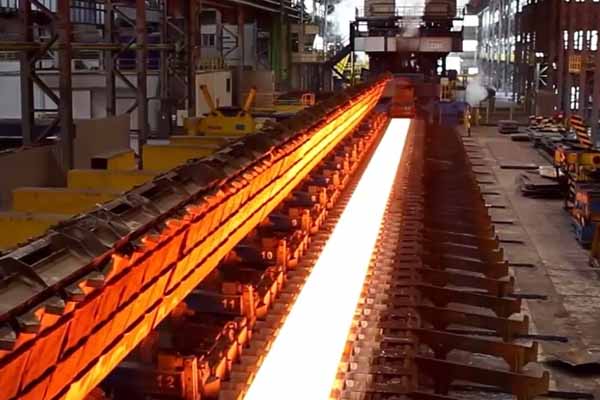
The "How" Behind the "What": The MTC should confirm the material was solution-anneated and water-quenched. This thermal processing is essential to dissolve carbides and intermetallics, putting all alloying elements into solid solution and ensuring optimal corrosion resistance. Annealing temperature (typically 1100-1150°C) should be stated.
The Validation Hierarchy: From Non-Destructive Check to Destructive Assurance
Material verification is a multi-stage process, escalating in cost and detail with the project's criticality.
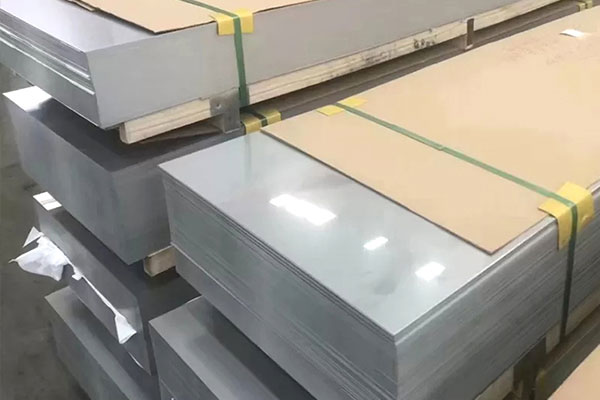
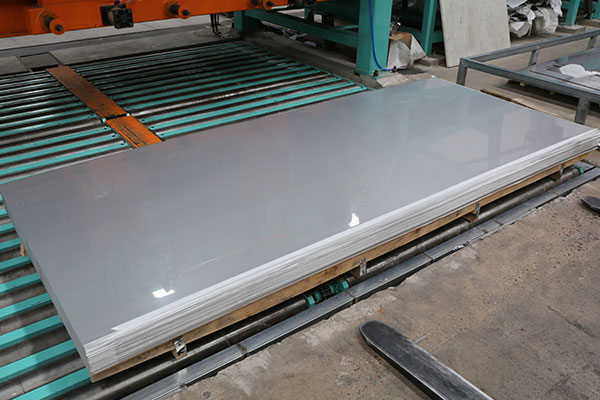
Tier 1: Identity Conformance (PMI - Positive Material Identification): This is the baseline. Use a calibrated handheld XRF analyzer on all sides and both surfaces of multiple plates from the same heat. Test points must include edges and centers to rule out clad or mis-marked material. Document every reading. This confirms you have the right alloy "family."
Tier 2: Property Verification (Laboratory Testing): For critical applications, select a representative sample and submit it to an accredited third-party lab. Testing should include:
Full Wet Chemical Analysis: To verify the PMI results and check for all trace elements.
Hardness Survey: To ensure uniform annealing.
Micrographic Examination: To check for delta ferrite content, inclusion rating (per ASTM E45), and the absence of sigma or chi phases, which are brittle and harm toughness and corrosion resistance.
Tier 3: Performance Qualification (Application Testing): In the most critical cases, performing a corrosion test coupon in a simulated process environment or conducting the relevant ASTM intergranular corrosion test (e.g., ASTM A262 Practice E) provides the highest confidence that the material will perform as expected.
Evaluating Your Supply Partner: A Dialogue on Technical Co-Management
The most effective risk mitigation is partnering with a supplier who operates as a technical extension of your team. Probe their expertise with scenario-based questions: "If our fabrication involves heavy cold forming, what should we specify regarding hardness limits on the MTC?" or "What filler metal and welding parameters do you recommend for this thickness to maintain corrosion equivalence in the weld?"
Assess their responsiveness and transparency when you request additional data points beyond the standard MTC. A superior supplier understands that their role is to deliver performance certainty, which is built on data, traceability, and proactive technical dialogue.
Our Value Proposition: Delivering Certifiable Material Integrity
We provide more than 904L plate; we provide a verifiable chain of custody and technical partnership. Our material is sourced with explicit chemistry targets ensuring robust Mo and Cu content. We supply comprehensive documentation packs, including full, traceable MTCs and can facilitate third-party inspection at origin. Our technical team engages on the specifics of your application, offering insights gleaned from similar projects to help you define the most appropriate validation protocol, ensuring the material integrity is built in from the outset.
To implement this framework, request our detailed technical data sheet and a sample MTC to review our standard deliverables. For a discussion on tailoring a validation plan for your upcoming project, contact our technical sales department.
 English
 Русский