When designing or procuring components for demanding industrial projects, one of the most critical material decisions is choosing between Stainless Steel and Nickel Alloys. While they may look identical on the surface, their internal chemistry, performance limits, and costs are vastly different.
This comprehensive guide breaks down the core differences in performance, cost, and typical applications to help you make the right choice for your project.
1. Performance Differences: Under the Hood
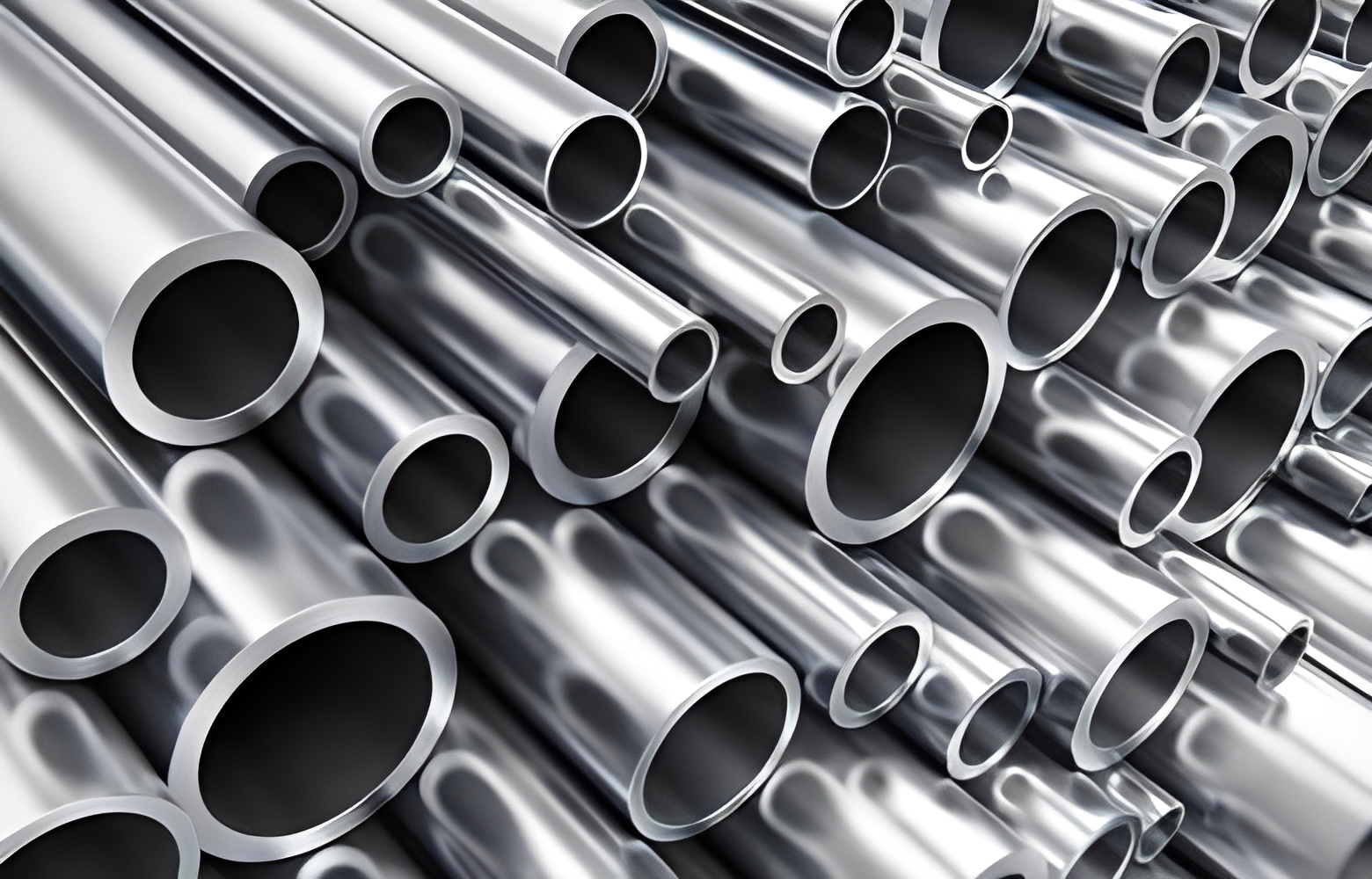
The fundamental difference lies in their base chemistry. Stainless steel is an iron-based alloy with a minimum of 10.5% Chromium. In contrast, nickel alloys use nickel as the primary base element, which is heavily enriched with chromium, molybdenum, and other superalloy elements to withstand conditions where iron-based metals fail.
High-Temperature Strength and Creep Resistance
Standard stainless steel grades like 304 or 316 lose their mechanical strength rapidly when temperatures exceed 500°C to 600°C. Even specialized heat-resistant grades like 310S will deform under heavy structural loads at high temperatures.
Nickel alloys perform on a different level. Thanks to their stable face-centered cubic (FCC) crystal structure and gamma-prime precipitation hardening, nickel superalloys such as Inconel 625 or Hastelloy C276 maintain outstanding tensile strength and creep resistance at temperatures scaling up to 1100°C and beyond.
Corrosion Resistance in Aggressive Environments
Stainless steel is highly resistant to atmospheric corrosion and mild acids. However, it remains highly vulnerable to pitting and Stress Corrosion Cracking (SCC) when exposed to chlorides, such as seawater or industrial brine.
Nickel alloys are virtually immune to chloride-induced stress corrosion cracking. Furthermore, the addition of high molybdenum and tungsten contents allows nickel alloys to resist highly reducing acids, including sulfuric and hydrochloric acids, where standard stainless steel would completely dissolve.
2. Cost Analysis: Short-Term vs. Long-Term (LCC)
There is no sugarcoating it: nickel alloys are significantly more expensive than stainless steel.
As a raw material, nickel is a volatile, high-value exchange commodity. A nickel-based superalloy can easily cost 3 to 10 times more per kilogram than high-grade 316L stainless steel. Additionally, processing and machining nickel alloys require specialized tooling and slower fabrication speeds, which further drives up the initial manufacturing costs.
However, we must look at the Lifecycle Cost (LCC). While the upfront cost of a nickel alloy is high, it often proves more economical over time. In highly corrosive or ultra-high-temperature systems, stainless steel parts might need replacement every few months. A single nickel alloy component can last for years under the exact same conditions, eliminating expensive unplanned downtime, emergency maintenance, and lost production capacity.
3. Typical Applications: Who Goes Where?
Because of the clear performance and cost split, these metals serve distinct industrial niches.
Stainless Steel Applications
-
Budget Profile: Cost-sensitive, high-volume manufacturing.
-
Aerospace: Aircraft structural frames, brackets, and cabin tubing.
-
Marine: Coastal railings, decorative fittings, and small boat propellers (often requiring cathodic protection).
-
Chemical Processing: Pharmaceutical equipment, sanitary piping, and food and beverage processing lines.
-
Energy and Power: Steam generators, condenser tubing, and low-temperature cooling water systems.
Nickel Alloy Applications
-
Budget Profile: Quality-critical, high-risk environments where component failure is not tolerated.
-
Aerospace: Jet engine turbine blades, exhaust nozzles, and combustion chambers.
-
Marine: Deep-sea subsea valves, splash-zone piping, and offshore drilling risers.
-
Chemical Processing: Sulfuric acid reactors, hot phosphoric acid piping, and highly acid-gas scrubbers.
-
Energy and Power: Nuclear reactor cores, geothermal power piping, and waste-to-energy boiler tubes.
Summary: The Selection Rule of Thumb
To simplify your procurement and engineering decision, use this quick rule of thumb:
-
Choose Stainless Steel if: The operating temperature remains below 500°C, the chemical environments are mild to moderately corrosive, and you are working within a tight, volume-driven budget.
-
Upgrade to Nickel Alloys if: The temperature exceeds 600°C under load, the environment is rich in high-concentration chlorides or reducing acids, or the financial and safety costs of a single component failure are simply too high to risk.
 English
 Русский