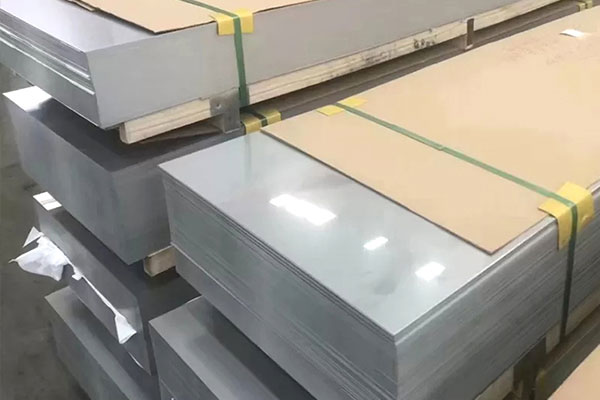
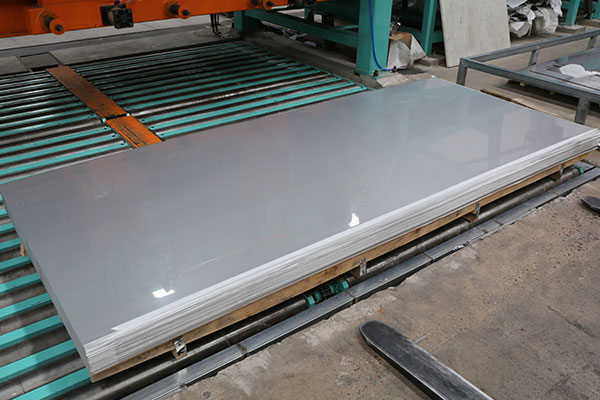
Let's be honest, a big part of material selection comes down to a simple question: "What's the most sensible choice that won't let me down?" You often need something tougher than plain carbon steel and more affordable than 304 stainless. If your project involves heat, needs to look decent, and has to be easy to work with, there's a quiet workhorse that often gets overlooked: 410S stainless steel plate.
Think of 410S as the practical, no-nonsense cousin in the stainless family. It's a low-carbon, nickel-free ferritic stainless steel. That "low-carbon" bit is key—it means you can weld and form it without the headaches of excessive hardening that plague its cousin, standard 410. The "nickel-free" part is why your accountant will like it. What you get is a solid balance: good resistance to oxidation and scale at high temperatures, decent corrosion resistance for many environments, and excellent all-around manufacturability. It's the steel you choose when you need reliability without a premium price tag.
Where Does 410S Plate Shine? The Top Applications.
This isn't a "use-it-anywhere" material. It excels in specific niches where its combination of properties hits the sweet spot.
Heat Treatment & Furnace Components: Walk through any heat treating facility, and you'll likely see 410S. It's the standard for furnace linings, trays, baskets, and radiant tubes that see temperatures up to about 815°C (1500°F). Why? It resists scaling and oxidation cycle after cycle. Its low thermal expansion means it's less prone to warping under heat stress compared to some austenitic grades. When you need a part to reliably hold other parts for hardening, annealing, or carburizing without breaking the bank, 410S plate is the default choice.
Automotive Exhaust Systems: Look underneath your car. From the manifold back to the muffler, especially in the hot sections, 410S is a prime candidate. It withstands the corrosive cocktail of hot exhaust gases and acidic condensate far better than plain steel. Crucially, it's also easy to stamp, bend, and weld into complex shapes like pipes and housings. For automakers, it delivers the needed durability and manufacturability at a tightly controlled cost, making it a cornerstone material for exhaust manufacturing.
Architectural, Appliance, and General Fabrication: This is where 410S often quietly replaces more expensive grades. Need a polished or brushed decorative panel for an elevator interior, a kitchen hood, or architectural trim? 410S takes a good finish. Making housings, covers, or chassis for industrial or consumer products? Its excellent formability speeds up production. In these dry or mildly corrosive indoor environments, its corrosion resistance is perfectly adequate, and its lower cost provides a direct competitive advantage over 304.
Making the Decision: Is 410S Right for Your Project?
Here's a quick mental checklist. Consider 410S plate if:
Your part will see elevated temperatures (up to ~815°C).
The environment involves heat, air, or steam—not strong acids or salt spray.
You need to do a lot of punching, bending, or welding.
The budget makes 304/316 a stretch, but galvanized steel isn't good enough.
If you checked most of these, 410S deserves a close look. It sits perfectly between carbon steel and the more common austenitic stainless steels, filling a critical gap in the cost-performance landscape.
A Few Straight Talks on Sourcing and Working with 410S.
To get the most out of it, keep these in mind:
Spec it Right: Always order to ASTM A240 UNS S41008. This ensures you get the correct low-carbon chemistry. Don't just ask for "410"—that can lead to getting the higher-carbon, hardenable version.
Mind its Personality: It machines and forms well, but it's stronger and less ductile than 304. Your press brake might need a slight adjustment for springback, and you'll want sharp tools for clean shearing.
Welding is Straightforward: Use a 410 or 309 filler rod, keep things clean, and avoid excessive heat input. It's far more weld-friendly than standard 430.
Our Take on 410S.
At Ronsco, we see 410S plate for what it is: a fundamentally sensible engineering solution. We stock it not because it's the most exotic or expensive, but because it reliably solves real-world problems for fabricators and OEMs. Our job is to help you match this practical material to the jobs where it delivers maximum value—avoiding both under-engineering and costly over-specification.
Have a project that needs to handle heat, fit a budget, and be easy to build? Let's talk. We can provide specs, competitive quotes on 410S plate, and straightforward advice on whether it's the right fit for you.
 English
 Русский